

Table of Contents
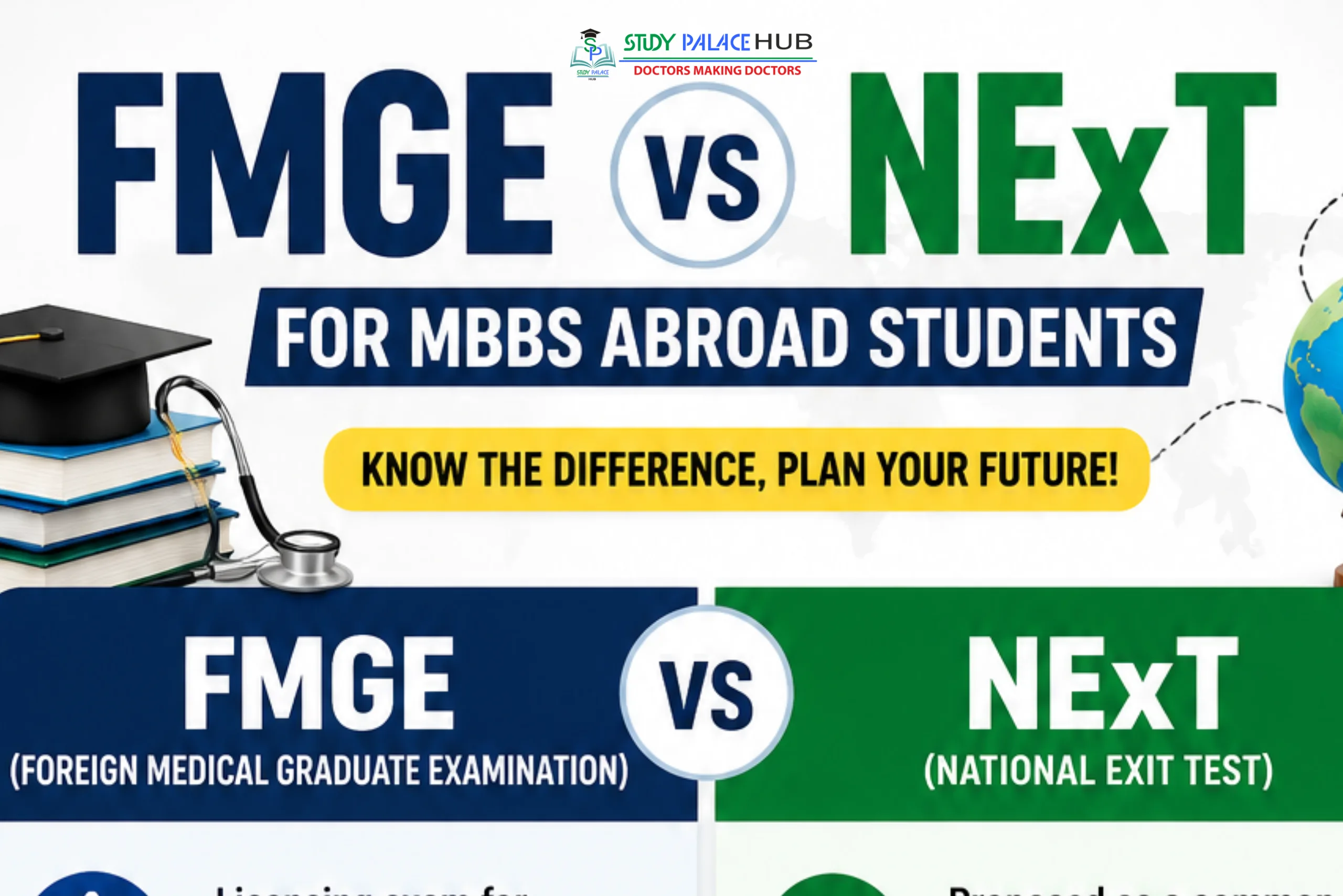
FMGE vs NExT: What Every MBBS Abroad Aspirant know
For thousands of Indian students planning to pursue MBBS abroad, one question often creates confusion: Should I prepare for FMGE or NExT after completing my medical degree?
With changing medical regulations in India, understanding the difference between FMGE (Foreign Medical Graduate Examination) and NExT (National Exit Test) has become extremely important for students considering MBBS in Russia, Georgia, Kazakhstan, Uzbekistan, Kyrgyzstan, and other countries.
Choosing the right medical university is not only about affordable tuition fees or international exposure. It is also about understanding the licensing process that allows you to practice medicine in India after graduation.
In this comprehensive guide, we will explain FMGE and NExT in simple language, discuss their differences, eligibility criteria, and what MBBS abroad aspirants should expect in the coming years.
Why Understanding FMGE and NExT Matters for MBBS Abroad
Every year, thousands of Indian students choose to study medicine overseas because of limited government medical seats and high private medical college fees in India.
Popular destinations include:
1. MBBS in Russia
2. MBBS in Georgia
3. MBBS in Kazakhstan
4. MBBS in Uzbekistan
5. MBBS in Kyrgyzstan
6. MBBS in Belarus
However, earning an MBBS degree abroad is only one part of the journey.
To legally practice medicine in India, foreign medical graduates must meet the licensing requirements prescribed by the medical authorities.
This is where FMGE and NExT become important.
What is FMGE?
FMGE stands for Foreign Medical Graduate Examination.
It is a licensing examination conducted for Indian students who have completed their medical education from foreign universities and want to practice medicine in India.
Students who complete MBBS in Russia or any other foreign country must qualify for FMGE before obtaining registration to practice medicine in India.
Key Features of FMGE
| Feature | FMGE |
| Full Form | Foreign Medical Graduate Examination |
| Purpose | Licensing Exam for Foreign Medical Graduates |
| Conducted By | National Board of Examinations (NBE) |
| Eligibility | MBBS Degree from Recognized Foreign University |
| Passing Marks | 150 out of 300 |
| Exam Frequency | Twice a Year |
| Internship Requirement | Mandatory after qualifying |
What is NExT?

NExT stands for National Exit Test.
It has been proposed as a unified examination that may serve multiple purposes:
1. Final year MBBS examination
2. Licensing examination
3. Postgraduate entrance examination
4. Merit-based ranking system
The objective of NExT is to establish a common standard for medical graduates studying in India and abroad.
Once fully implemented, NExT is expected to streamline medical licensing and postgraduate admissions under a single framework.
FMGE vs NExT: Quick Comparison
| Parameter | FMGE | NExT |
| Purpose | Licensing Exam for Foreign Graduates | Common Exit and Licensing Exam |
| Applicable To | MBBS Abroad Students | Indian and Foreign Medical Graduates |
| PG Entrance | Separate Exam Required | Integrated with PG Admissions |
| Frequency | Twice Yearly | Expected Annual Schedule |
| Exam Pattern | Screening Test | Multi-purpose Comprehensive Exam |
| Internship Link | After Passing FMGE | Integrated Structure |
| Evaluation | Pass/Fail | Merit-Based Ranking |
Will FMGE Be Replaced by NExT?
This is one of the most frequently asked questions among students planning MBBS abroad.
The long-term objective of NExT is to create a uniform assessment system for all medical graduates.
However, students should always follow the latest guidelines issued by the relevant authorities because implementation timelines and regulations may evolve.
The most important point is that students should focus on choosing a recognized university that meets all eligibility norms rather than selecting a university solely based on assumptions about future examinations.
How Does This Impact Students Planning MBBS in Russia?
Russia remains one of the most preferred destinations for Indian medical aspirants.
Why Students Choose MBBS in Russia
1. Affordable tuition fees
2. Globally recognized universities
3. English-medium programs
4. Advanced medical infrastructure
5. Large Indian student community
6. International clinical exposure
However, students should understand that studying abroad requires dedication and preparation for licensing requirements after graduation.
Whether the pathway involves FMGE, NExT, or future regulatory frameworks, the fundamental goal remains the same:
To demonstrate medical competency and readiness to practice medicine safely.
Important Factors to Consider Before Taking MBBS Abroad Admission
Instead of focusing only on FMGE or NExT, students should evaluate several critical factors before choosing a medical university.
1. University Recognition
Ensure the university is recognized by relevant authorities and meets regulatory requirements.
2. Clinical Training Quality
Practical exposure plays a significant role in preparing students for licensing exams.
3. English-Medium Education
A clear understanding of medical concepts is essential for future examinations.
4. Student Support Services
Universities with dedicated support systems often help students adapt better.
5. Academic Performance
Strong academics during MBBS directly influence licensing exam success.
FMGE Passing Rates: What Students Should Learn
Many students focus only on pass percentages when selecting universities.
While pass rates can provide useful insights, they should not be the sole deciding factor.
Several factors influence examination performance:
1. Student dedication
2. Study habits
3. Clinical exposure
4. Language proficiency
5. University curriculum
6. Preparation strategy
A good university provides the foundation, but individual effort remains the most important contributor to success.
How to Prepare for Future Licensing Exams During MBBS Abroad
Whether the future involves FMGE, NExT, or another standardized framework, students can begin preparing from their first year.
Recommended Preparation Strategy
| Academic Stage | Focus Area |
| Focus Area | Anatomy, Physiology, Biochemistry |
| Second Year | Pathology, Pharmacology, Microbiology |
| Third Year | Clinical Concepts |
| Fourth Year | Case-Based Learning |
| Final Year | Mock Tests and Revision |
Common Mistakes MBBS Abroad Aspirants Make
Choosing a University Based Only on Fees
Affordable education is important, but quality should never be compromised.
Ignoring Clinical Exposure
Practical learning is essential for becoming a competent doctor.
Not Understanding Licensing Requirements
Students should stay informed about examination regulations.
Depending on Last-Minute Preparation
Licensing exams test concepts developed over several years.
Following Misinformation Online
Always verify information through official sources and trusted educational consultants.
Is MBBS in Russia Still a Good Option?
Yes, MBBS in Russia continues to be one of the most popular choices for Indian students.
Russian medical universities offer:
1. High educational standards
2. Modern laboratories
3. Experienced faculty
4. Affordable tuition fees
5. International recognition
6. Diverse student communities
Students who remain academically focused and actively participate in clinical training can build a strong foundation for future licensing examinations.
The key is selecting the right university and maintaining consistent academic performance throughout the course.
Future of Medical Licensing for Foreign Graduates
The medical education landscape is evolving globally.
The objective behind reforms such as NExT is to create greater transparency, standardization, and quality assurance in medical education.
For students pursuing MBBS abroad, the message remains clear:
1. Focus on quality education.
2. Develop strong medical fundamentals.
3. Gain practical clinical experience.
4. Stay updated with regulatory developments.
A strong medical education will always remain valuable regardless of changes in examination formats.
Conclusion
Understanding the difference between FMGE and NExT is crucial for every student planning MBBS abroad or MBBS in Russia.
While discussions around licensing reforms continue, students should remember that examinations are only one part of becoming a successful doctor. The real focus should be on selecting a recognized university, building strong clinical knowledge, and maintaining academic consistency throughout medical school.
Whether your future path involves FMGE, NExT, or another regulatory framework, a well-planned medical education journey will position you for long-term success.
Before taking admission, research carefully, seek guidance from trusted experts, and choose a university that aligns with your career goals.
(FAQs)
FMGE is a licensing examination for foreign medical graduates, while NExT is designed as a comprehensive exit, licensing, and postgraduate entrance examination.
Foreign medical graduates must comply with the licensing requirements applicable at the time of graduation and registration.
Regulatory guidelines determine eligibility. Students should stay updated with official notifications.
Recognition depends on the university meeting applicable regulatory requirements and guidelines.
Russia, Georgia, Kazakhstan, Uzbekistan, Kyrgyzstan, and Belarus are among the most popular destinations.
The difficulty level cannot be directly compared because the objectives and structure differ.
v
Focus on strong fundamentals, regular revision, clinical exposure, and mock tests.
The proposed framework includes a merit-based ranking system for postgraduate admissions.
Recognition, clinical training, faculty quality, curriculum, infrastructure, and student support services.
For students who choose a recognized university and remain committed to their studies, MBBS abroad can be an excellent pathway toward a medical career.
Leave A Comment